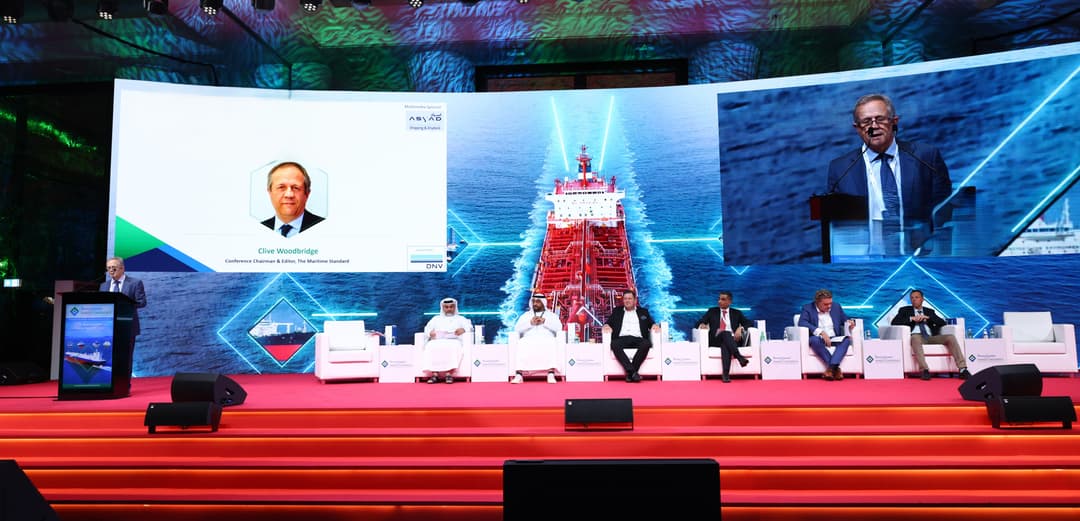
The AITECH Conference
The Maritime Standard AITech Conference 2026
24 November 2026 | Taj Exotica Resort, Dubai, UAE
Blog
September 2026
Autonomous Ships and AI: How Maritime Operations Are Moving Towards Autonomy
Autonomous Ships and AI: How Maritime Operations Are Moving Towards Autonomy
The maritime industry is entering a new phase of automation in which artificial intelligence, advanced sensors, connectivity and remote operations are beginning to change how some vessels can be navigated and managed. The transition is not about removing people from shipping overnight. It is about determining which functions can be automated, which require remote supervision and where human decision-making remains essential.
The regulatory landscape has also moved forward. In May 2026, the International Maritime Organization adopted the first international Code of Safety for Maritime Autonomous Surface Ships, known as the MASS Code. The non-mandatory Code took effect on 1 July 2026 and establishes a framework for the safe integration of remotely controlled and autonomous cargo ships covered by SOLAS Chapter I.
What Makes a Ship Autonomous?
Autonomous shipping covers a range of operating models rather than a single technology.
A vessel may use automated systems to support specific functions while retaining a conventional crew onboard. At a more advanced level, certain functions can be performed remotely or independently by onboard systems. IMO defines a Maritime Autonomous Surface Ship, or MASS, as a ship that can operate independently of human interaction to varying degrees.
This distinction is important because automation does not automatically make a vessel a MASS. IMO states that enhanced automation alone does not qualify a ship as a MASS. The vessel must undergo the relevant approval process and hold a valid MASS Safety Certificate.
The practical development of autonomy is therefore likely to be gradual, with different levels of automation and remote operation applied according to vessel type, route, operating environment and specific functions.
Where AI Enters the Picture
AI can provide the analytical layer required for increasingly sophisticated autonomous operations.
Modern vessels generate information from navigation equipment, sensors, machinery systems, weather data, communications and other onboard technologies. AI-based systems can analyse these inputs to identify patterns, assess conditions and support decisions.
For navigation, this can include the interpretation of information from surrounding traffic and the vessel's operating environment. AI can also support the identification of potential risks and help determine whether operating conditions remain within predefined parameters.
The objective is not simply to make a vessel operate without people. It is to enable maritime systems to process complex information continuously and support decisions in situations where the volume and speed of incoming data can challenge conventional operating methods.
From Decision Support to Remote Operations
One of the most important developments in autonomous shipping is the emergence of Remote Operations Centres.
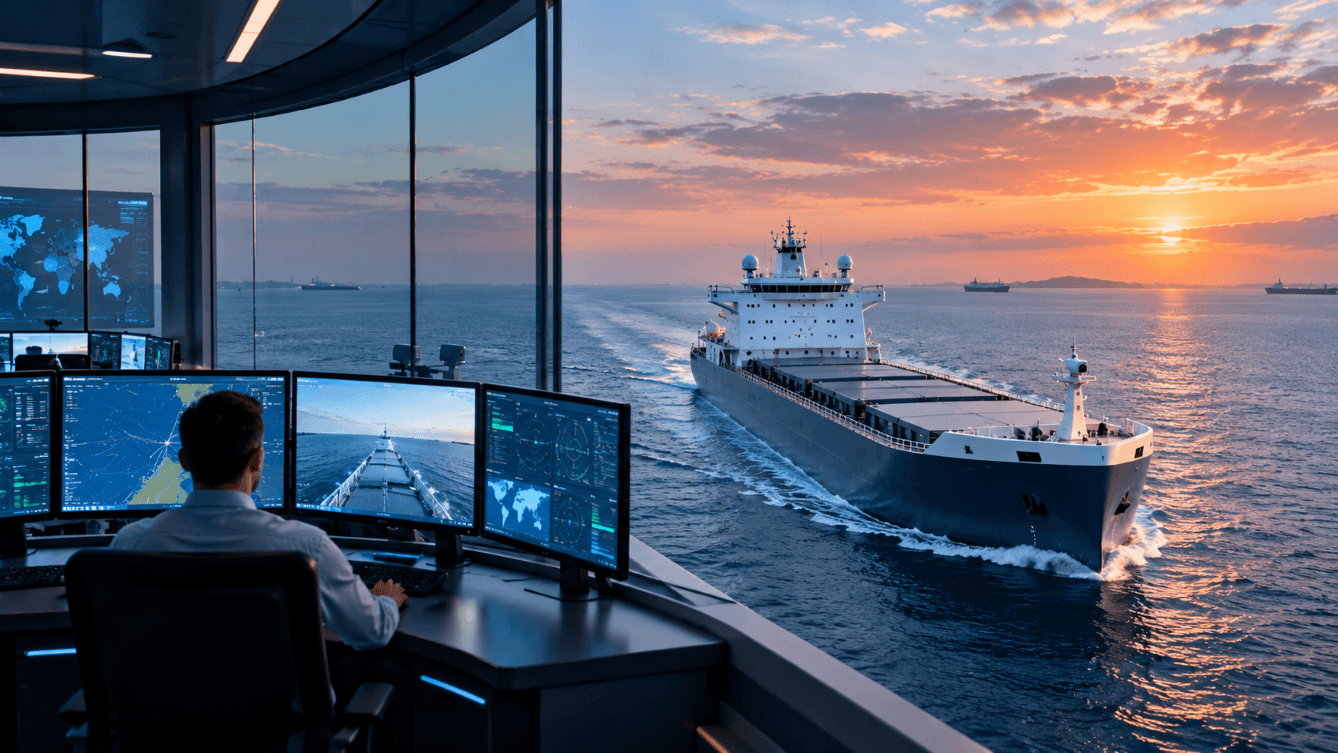
These facilities allow trained personnel ashore to monitor or control vessel functions remotely. Under the IMO MASS framework, remote operations form part of the regulatory architecture for autonomous and remotely controlled ships.
Human oversight remains central. IMO's MASS Code specifies that the master retains overall responsibility for the ship, even when the master is not physically onboard. Remote Operations Centres must also operate within an appropriate safety management framework.
This means the future of autonomous shipping is not necessarily a choice between humans and machines. Instead, maritime operations can evolve towards systems in which onboard automation and shore-based expertise work together.
The Role of Sensors and Situational Awareness
Autonomy depends on a vessel's ability to understand its operating environment.
Sensors and navigation systems provide information about factors such as position, movement, surrounding traffic and environmental conditions. AI can process these inputs to support situational awareness and identify changes that may require action.
However, autonomous navigation must account for the limitations of technology and changing environmental conditions. The IMO MASS Code requires consideration of the operational conditions and limitations within which an autonomous vessel is designed to function. These can include factors such as wind, sea state, visibility, water depth and whether operations take place during the day or night.
This risk-based approach is particularly important because maritime environments are dynamic. A system designed to operate effectively under one set of conditions may require human intervention when conditions move beyond its defined operating limits.
Safety and Risk Management
Safety remains one of the central challenges in the development of autonomous vessels.
Removing or reducing manual intervention does not eliminate operational risk. It changes the nature of the risks that need to be managed.
The IMO framework therefore places significant emphasis on risk assessment, system design, connectivity, remote operations, navigation, search and rescue, cybersecurity and other safety considerations. Autonomous vessels must also continue to meet applicable international maritime requirements.
For shipowners and technology developers, this creates a requirement to demonstrate not only that an autonomous system can perform a particular function, but also that it can do so safely across the operating conditions for which it has been approved.
Cybersecurity Becomes Part of Navigation
Connectivity is fundamental to remote and autonomous operations, but it also introduces additional cyber considerations.
A remotely operated vessel depends on secure communication between the ship and shore-based systems. Navigation and operational data must be protected against interference, while systems must be capable of detecting and responding to abnormal conditions.
The IMO MASS Code specifically addresses connectivity and cybersecurity as part of the framework for autonomous ships.
For operators, this means cybersecurity needs to be considered as part of the vessel's operational architecture rather than treated solely as an IT issue.
What Happens to the Crew?
Autonomous shipping is also changing the discussion around maritime skills.
As more functions become automated, some tasks traditionally performed onboard may be transferred to shore-based teams or supported by intelligent systems. At the same time, new capabilities will be required in areas such as remote vessel monitoring, digital systems, data analysis, automation and technology management.
The IMO framework recognises the human element as an important component of MASS operations. Its requirements cover areas including manning, training and watchkeeping, while maintaining the master's overall responsibility.
The result could be a gradual redistribution of maritime roles rather than a simple reduction in the importance of people.
Regulation Is Moving With the Technology
For years, autonomous shipping development has advanced faster than the international regulatory framework. That position changed significantly in 2026 with the adoption of the MASS Code.
The current Code is non-mandatory, with IMO planning an experience-building phase before work towards a mandatory framework. IMO's roadmap envisages development of a mandatory MASS Code from 2028, with adoption targeted by 1 July 2030 and entry into force expected on 1 January 2032.
This staged approach gives regulators and industry an opportunity to learn from real-world operations before a mandatory international regime is introduced.
The Road Towards Maritime Autonomy
Fully autonomous international commercial shipping remains a developing field. IMO states that there are currently no commercially operating internationally trading SOLAS cargo ships operating autonomously or under remote control, although larger remotely controlled and autonomous vessels have been successfully trialled.
This makes the current period particularly important. Shipowners, technology companies, regulators, classification organisations and maritime professionals are defining how autonomy can be introduced safely and responsibly.
The immediate opportunity is not simply to create ships that can operate without onboard intervention. It is to build maritime systems in which automation, AI, remote operations and human expertise complement one another.
As the regulatory framework develops, the competitive question for shipping companies will increasingly concern how these technologies can be tested, integrated and scaled while maintaining safety, accountability and operational reliability.
The future of autonomous shipping will therefore be shaped as much by regulation, human oversight and operational discipline as by advances in artificial intelligence.
Sponsors

Gold Sponsor
Platinum Sponsor
Networking Reception
Multimedia
Delegate Bags
Valet Parking
Gold Sponsor
Platinum Sponsor
Networking Reception
Multimedia
Delegate Bags
Valet Parking
Gold Sponsor
Platinum Sponsor
Networking Reception
Multimedia
Delegate Bags
Valet Parking
Gold Sponsor
Platinum Sponsor
Networking Reception
Multimedia
Delegate Bags
Valet Parking
Supporting Associations

Media Partners