The AITECH Conference
The Maritime Standard AITech Conference 2026
24 November 2026 | Taj Exotica Resort, Dubai, UAE
Blog
October 2026
AI-Powered Decision Intelligence: How Real-Time Data Is Changing Maritime Operations
AI-Powered Decision Intelligence: How Real-Time Data Is Changing Maritime Operations
The maritime industry has never lacked data. Ships, ports, terminals, cargo systems, weather services, navigation equipment and commercial platforms generate vast amounts of information every day.
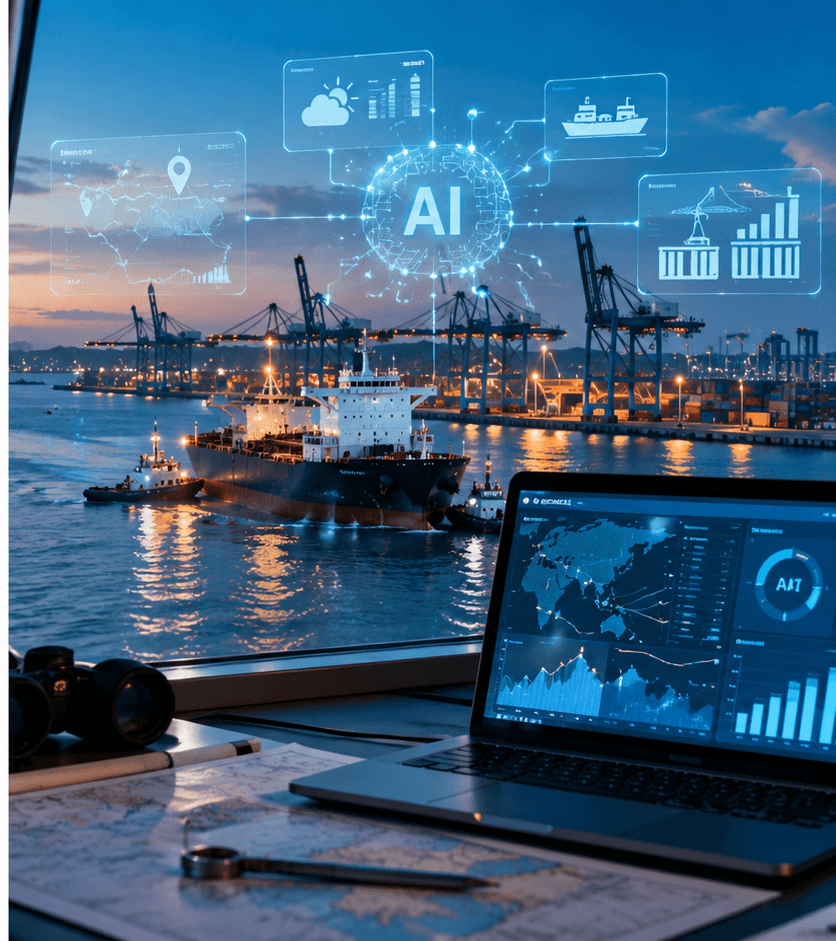
The challenge is turning that information into timely decisions. Artificial intelligence is increasingly helping the industry move from data collection towards decision intelligence. Instead of simply presenting information to operators, AI-enabled systems can analyse multiple data sources, identify patterns and provide recommendations that support operational decisions.
This shift is particularly relevant to shipping, where conditions can change rapidly. Weather, vessel traffic, port congestion, fuel prices, cargo requirements and schedule changes can all influence an operational decision. The ability to assess these variables together can give maritime teams a more complete basis for action.
From Data Analytics to Decision Intelligence
Traditional maritime data systems often focus on reporting what has already happened. A vessel may have consumed a certain amount of fuel, arrived at a particular time or experienced a delay. Decision intelligence goes a step further by asking what the available information means for the next decision.
AI systems can combine historical information with current operational data to identify potential outcomes and present options to decisionmakers. The technology can support questions such as whether a vessel should adjust its operating plan, how a schedule may be affected by changing conditions, or where operational attention should be prioritised.
The distinction is important. Decision intelligence is not simply about producing more dashboards. Its value comes from connecting data analysis with a specific operational decision.
Real-Time Decisions at Sea
Maritime operations involve decisions that can change as conditions develop. Weather forecasts can change. Traffic conditions can evolve. A vessel's estimated time of arrival can shift because of operational or environmental factors. Port conditions can also influence voyage planning.
AI can analyse information from multiple sources and identify relationships that may not be immediately apparent when each data set is considered separately. For example, an intelligent decision-support system could combine vessel position, speed, weather information, estimated arrival time and operational constraints to provide an updated assessment of available options.
The final decision can remain with the relevant maritime professional, while AI provides analytical support. This human-in-the-loop approach is particularly important for safety-critical operations. AI can help process information at speed, but maritime decisions still require professional judgement, operational context and appropriate accountability.
Turning Predictive Information Into Action
Prediction is useful only when it can support a decision. A system may identify a potential delay several hours in advance. The operational value comes from determining what can be done with that information.
AI-enabled decision support can help organisations evaluate different responses, compare possible outcomes and identify the factors that could influence each option. This can apply across a range of maritime activities, including voyage planning, cargo coordination, port calls, fleet scheduling and logistics management.
The objective is not to predict the future with certainty. It is to improve the quality and speed of decisions when the future remains uncertain.
Smarter Voyage Planning
Voyage planning is an area where multiple variables need to be considered simultaneously. Route, weather, vessel characteristics, schedule requirements and fuel considerations can all influence how a voyage is managed. AI can help analyse these variables and identify potential adjustments as conditions change.
This is different from autonomous navigation. A decision-support system can provide recommendations without taking control of the vessel. That distinction is important for the wider adoption of AI in maritime operations.
Many organisations can begin using AI to support existing workflows without immediately changing the fundamental structure of operational responsibility.
Improving ETA and Schedule Management
Accurate estimated times of arrival are important to a wide range of maritime stakeholders. Terminals need to plan berth and equipment availability. Cargo interests need visibility over deliveries. Inland transport providers need to coordinate onward movements. Ship operators need to manage schedules and resources.
AI can support ETA prediction by analysing historical voyage information alongside current operational and environmental conditions. More accurate predictions can help stakeholders prepare for changes earlier.
This can reduce the amount of reactive decision-making required when schedules shift. The benefit therefore extends beyond the vessel itself. Better information can improve coordination between different participants in the maritime logistics chain.
AI and Operational Prioritisation
Maritime organisations also face the challenge of deciding where limited attention and resources should be directed. A fleet operator may monitor numerous vessels simultaneously. A terminal may manage hundreds of operational events.
A logistics team may need to respond to multiple changes at the same time. AI can help prioritise information by identifying events that require closer attention. Instead of treating every alert or operational change equally, intelligent systems can analyse the available information and highlight situations that may have a greater operational impact.
This can help reduce information overload and allow specialists to focus their attention where it is most needed.
The Importance of Data Quality
Decision intelligence is only as effective as the information supporting it. Incomplete, inconsistent or outdated data can produce unreliable recommendations. This makes data governance an important part of AI adoption.
Maritime organisations need to understand where their data comes from, how it is processed and whether different systems can exchange information effectively.
The International Maritime Organization has highlighted digitalisation, data sharing, interoperability and data governance as important elements of the maritime industry's digital transition. In March 2026, the IMO Facilitation Committee approved an overarching Strategy on Maritime Digitalization, highlighting the importance of interoperable and standardised digital systems. For AI, this foundation is critical.
Better algorithms cannot compensate for poor-quality or poorly governed data. From Individual Decisions to Enterprise Intelligence The longer-term opportunity is to connect decision intelligence across different parts of a maritime organisation.
Information from fleet operations could be combined with commercial planning. Vessel schedules could be considered alongside port conditions. Operational data could inform financial and resource decisions. This creates the possibility of a more integrated approach to management, where decisions are informed by a shared operational picture rather than isolated systems. The challenge is implementation.
Organisations need systems that can communicate with one another, appropriate governance structures and employees who understand both the capabilities and limitations of AI.
Human Expertise Still Matters
The increasing use of AI does not make maritime expertise less important. In many cases, it makes professional judgement more important because operators need to understand why an AI system is recommending a particular course of action and whether that recommendation is appropriate in the circumstances.
Explainability, oversight and clearly defined responsibilities are therefore important considerations when deploying AI for operational decision-making. The strongest applications are likely to be those that combine computational capability with human experience rather than attempting to remove people from the decision process altogether.
Building the Maritime Decision-Making System of the Future
The next stage of maritime digitalisation will increasingly focus on what organisations can do with information rather than simply how much information they collect.
AI-powered decision intelligence can help transform fragmented data into operational insights, support faster responses to changing conditions and improve coordination across maritime activities.
Its value will depend on more than the sophistication of the underlying algorithms. Reliable data, interoperable systems, effective governance and skilled professionals will all be essential to turning AI recommendations into meaningful operational outcomes.
For shipping companies and logistics operators, the opportunity is to build decision-making systems that are faster, more informed and better equipped to operate in an increasingly complex environment.
The future of intelligent maritime operations may therefore be defined not by machines making every decision, but by people making better decisions with the support of increasingly capable artificial intelligence.
Sponsors

Gold Sponsor

Platinum Sponsor

Networking Reception
Multimedia
Delegate Bags
Valet Parking
Gold Sponsor
Platinum Sponsor
Networking Reception
Multimedia
Delegate Bags
Valet Parking
Gold Sponsor
Platinum Sponsor
Networking Reception
Multimedia
Delegate Bags
Valet Parking
Gold Sponsor
Platinum Sponsor
Networking Reception
Multimedia
Delegate Bags
Valet Parking
Supporting Associations








Media Partners