The AITECH Conference
The Maritime Standard AITech Conference 2026
24 November 2026 | Taj Exotica Resort, Dubai, UAE
Blog
October 2026
AI and Seafarer Wellbeing: How Technology Can Support a Safer Maritime Workforce
AI and Seafarer Wellbeing: How Technology Can Support a Safer Maritime Workforce
The maritime industry's digital transformation is changing not only how ships operate, but also how seafarers work, train and manage the demands of life at sea.
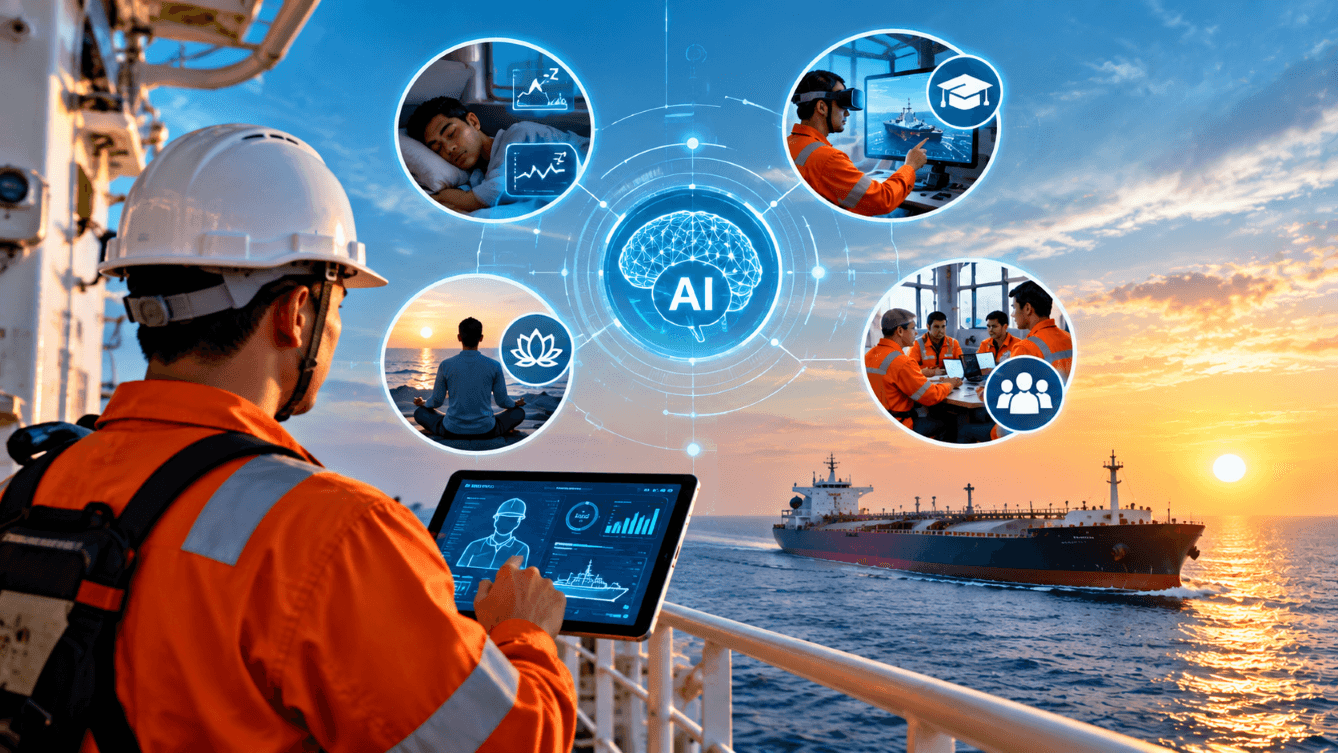
As vessels become more technologically advanced, artificial intelligence is creating opportunities to support crew safety, improve fatigue awareness and provide better information for workforce management. Seafarers work in an environment shaped by irregular schedules, extended periods away from home, changing weather conditions and demanding operational responsibilities.
Fatigue and reduced alertness can affect performance regardless of a person's experience or training. The International Maritime Organization (IMO) recognises fatigue as a maritime safety hazard and has developed guidance addressing its causes, prevention and management.
AI cannot eliminate these challenges. However, when implemented responsibly, it can help maritime organisations identify potential risks earlier, support training and make crew welfare a more informed part of operational decision-making.
Understanding Fatigue Through Technology
Fatigue is not always easy to identify through observation alone. Seafarers may continue performing their duties while experiencing reduced alertness, and the effects can vary according to workload, sleep patterns, working conditions and individual circumstances.
Technology can provide additional information to help organisations understand these risks. Depending on the system, monitoring tools may use work schedules, rest-hour records, self-reported fatigue assessments and other operational information to identify patterns that warrant attention.
AI can help analyse these data sets and flag potential concerns for further assessment. For example, a system could identify recurring periods of demanding workloads or highlight patterns in recorded rest periods that require management review. Such tools should support, rather than replace, professional judgement.
A system cannot reliably determine a person's fitness for duty from a single data point, and any assessment must account for the limitations of the information available. The IMO's fatigue guidelines already address the responsibilities of companies, seafarers, ship designers and maritime administrations.
They also include examples of sleep and fatigue monitoring tools, providing a recognised foundation for further exploration of technology-assisted fatigue management.
AI-Assisted Crew Training
Training is another area where AI can support the maritime workforce. Traditional training remains essential for developing the technical knowledge, practical competence and judgement required for safe ship operations.
AI-assisted learning tools can complement these methods by helping training providers adapt learning materials to different experience levels and identify areas where additional instruction may be useful. For example, an AI-enabled training platform could analyse assessment results to identify recurring knowledge gaps and recommend additional exercises.
Conversational learning tools could help seafarers revise technical procedures, explore operational scenarios or prepare for assessments. Simulation-based training can also help crews practise responses to challenging situations in a controlled environment.
AI may be used to vary scenarios or provide feedback, depending on the capabilities of the training system. These applications should be evaluated against established training objectives and professional standards.
AI-generated explanations and assessments require appropriate oversight, particularly when the subject involves safety-critical procedures.
The IMO's International Convention on Standards of Training, Certification and Watchkeeping for Seafarers establishes international requirements for seafarer competence. The organisation has also been reviewing these standards to reflect developments in technology and the changing demands of maritime work.
Supporting Mental Health and Wellbeing
Physical safety is only one part of crew welfare. Mental health, social interaction and working conditions also influence the experience of life at sea. Technology can help improve access to wellbeing resources, confidential information and support services.
Digital platforms may provide access to educational material, facilitate communication with support providers or help companies gather feedback about working conditions.
AI-enabled tools may also assist with identifying broader patterns in voluntary, appropriately anonymised workforce feedback. For instance, recurring concerns about workload, access to support or working arrangements could prompt a company to review its policies. However, wellbeing cannot be reduced to an algorithm or a score.
AI systems should not be used to make unsupported psychological diagnoses or infer a seafarer's emotional state with unwarranted certainty. Crew members must also understand what information is collected, why it is needed and who can access it. Confidentiality, informed participation and clear limits on the use of personal data are essential to building trust.
The IMO has recognised psychological safety, mental health and wellbeing as important maritime workforce concerns, highlighting the need for coordinated action across the sector.
The Promise and Limits of Emotion Recognition
Some emerging technologies claim to infer emotional states from facial expressions, voice patterns, behaviour or other signals. These applications are sometimes described as emotional AI. In maritime settings, their proposed uses may include identifying signs of stress or supporting broader crew wellbeing initiatives.
Yet interpreting a person's emotional state from indirect signals is complex, and such systems can produce misleading results. Facial expressions, speech and behaviour do not provide definitive evidence of how a person feels.
Results may also be affected by environmental conditions, cultural differences, individual variation and the quality of the system. For these reasons, maritime organisations should distinguish established fatigue-management practices from less mature emotional inference technologies.
Any proposed use should be assessed for scientific validity, reliability, privacy implications and potential consequences for crew members. The more defensible approach is to use technology to support voluntary wellbeing initiatives, identify operational risk factors and improve access to assistance, rather than treating AI as an authority on an individual's mental state.
Balancing Monitoring With Privacy
Crew monitoring technologies raise important questions about privacy and trust. Systems that collect information about sleep, activity, behaviour or health-related indicators can involve sensitive personal data.
Even where monitoring is intended to improve safety, excessive collection or unclear use of information may discourage crew members from participating. Shipping companies should establish clear policies covering the purpose of monitoring, the data collected, access permissions, retention periods and procedures for addressing concerns.
Where possible, systems should collect only the information necessary for a defined safety or welfare purpose. Individual-level information should not automatically become a tool for disciplinary action or employment decisions.
Governance is especially important when AI systems influence decisions affecting work assignments, performance assessments or fitness-for-duty processes. Human review and appropriate safeguards are necessary to prevent inaccurate outputs from unfairly affecting seafarers.
Technology will be most useful when crew members understand its purpose and have confidence that their information is being handled responsibly.
Helping Maritime Leaders Make Better Workforce Decisions
AI can also support workforce planning at an organisational level. By analysing appropriately governed operational data, companies may identify recurring workload pressures, training requirements or patterns that suggest a need to review staffing arrangements.
This can help managers consider whether existing procedures and resources are sufficient. Such analysis should not be used to justify unsafe reductions in crewing or to assume that technology can compensate for excessive workloads.
AI should help organisations recognise risks and evaluate possible improvements, not obscure the underlying causes of fatigue. The IMO's work on the human element emphasises that maritime safety is a shared responsibility involving seafarers, companies, regulators and other participants in the shipping industry.
Technology can contribute to that responsibility, but effective outcomes still depend on appropriate staffing, safe working arrangements, training, leadership and a culture in which crew members can raise concerns.
Preparing for a More Human-Centred Digital Maritime Industry
The adoption of AI in shipping is often discussed in terms of efficiency, automation and technical capability. Crew wellbeing deserves an equally considered place in that conversation.
AI-assisted training, fatigue-risk analysis and digital access to wellbeing resources could help maritime organisations make better use of information and identify areas requiring attention. Their value will depend on reliable systems, clear safeguards and meaningful participation from the people expected to use them.
The industry should also recognise the limits of these technologies. AI cannot replace adequate rest, sound management, professional training or direct support for seafarers.
Nor should monitoring become a substitute for addressing the working conditions that contribute to fatigue and stress. The objective should be a maritime workforce that benefits from technological progress without losing the human judgement, dignity and professional expertise on which safe shipping depends.
As the industry advances towards increasingly digital operations, responsible AI adoption will mean more than developing smarter systems. It will also mean using technology to support the people who keep global maritime trade moving.
Sponsors

Gold Sponsor
Platinum Sponsor

Networking Reception
Multimedia
Delegate Bags
Valet Parking
Gold Sponsor
Platinum Sponsor
Networking Reception
Multimedia
Delegate Bags
Valet Parking
Gold Sponsor
Platinum Sponsor
Networking Reception
Multimedia
Delegate Bags
Valet Parking
Gold Sponsor
Platinum Sponsor
Networking Reception
Multimedia
Delegate Bags
Valet Parking
Supporting Associations



Media Partners